
Does Paying at the Pump Mean Profit for Convenience Store Owners?
By Matthew Roberts, Certified General Real Estate Appraiser
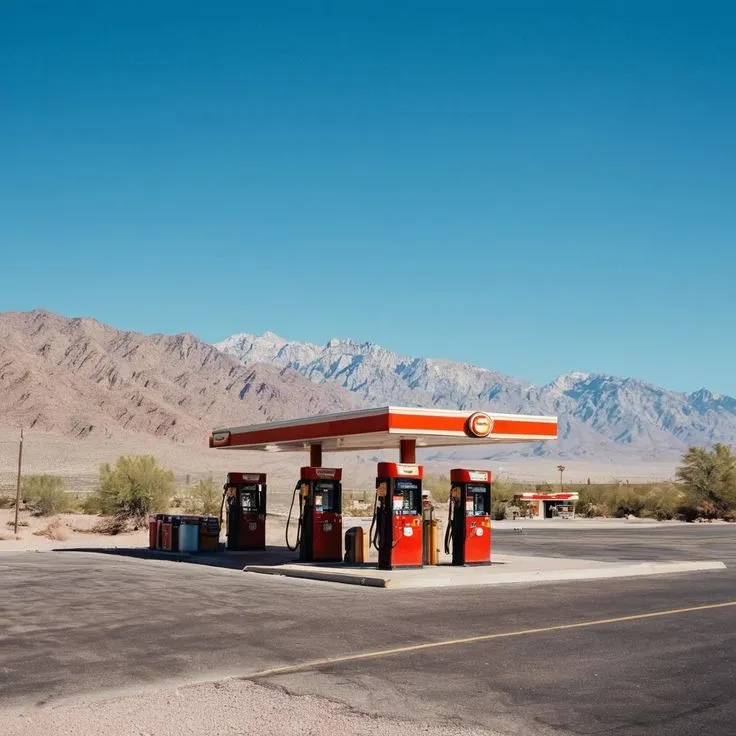
In appraising convenience stores, among several other factors, we give consideration to the strength of the market and market trends affecting profitability. Understanding market trends and nuances is essential to accurately appraising convenience stores.
The Convenience Store Industry
The C‑Store Industry
Fuel Sells, In‑Store Pays
Share of a typical convenience store’s sales and profit (approximate).
Sales
Profit
Low fuel margins, but the fuel customer drives overall sales.
Farm · Commercial · Home appraisals | Missouri · Illinois · Iowa
Motor fuels sales account for more than 2/3rds of the convenience store industry’s sales. But, because of low margins, it contributes less than 1/3rd of total store profit.
Increasing emphasis is being placed on in-store sales, but the c-store owner must remember that the fuel customer drives overall sales. C-stores have been working to create in-store demand and success has been found in providing quick snacks or on-the-go meals. Busy consumers have responded favorably, and food service is a rapidly expanding segment of the industry.
Modern Challenges for C-Stores
Two major issues pose problems for the c-store industry: credit card fees and competition from hypermarkets. Credit card fees are calculated on a percentage of the retail price, and as fuel prices increase so do credit card fees. With fees averaging 2% of retail price, these costs can chip away at the store’s already small fuel sale margins.
A hypermarket is a large retailer that predominantly sells merchandise/groceries, but also sells fuel. Examples include stores like Wal-Mart, Costco, or Hy-Vee. These stores are selling fuels simply to increase their in-store sales. Hypermarkets can offer fuel slightly cheaper than c-stores and manage lower margins. Because of the competition, the c-store industry is currently undergoing structural changes to meet apparent consumer demand for quick and convenient products and services. Only time will tell what the future holds as new business models emerge in the convenience store industry.
Modern Challenges
Two Pressures on Margins
What chips away at a c‑store’s already small fuel margins.
Challenge 1
Credit Card Fees
~2%
of retail price, on average
- Calculated as a percentage of the retail price
- As fuel prices increase, so do the fees
Challenge 2
Hypermarkets
12%
of the U.S. gasoline market
- Large retailers selling fuel to increase in‑store sales
- Can offer fuel slightly cheaper and manage lower margins
Farm · Commercial · Home appraisals | Missouri · Illinois · Iowa
Fuel Margins
Motor fuel prices per gallon and fuel margins for retailers have fluctuated dramatically over the past ten years. Margin cents per gallon appears to be stable to increasing. This would be good for profits; however, the margin as a percentage appears to have decreased over the past ten years. Margin cents per gallon is not increasing as fast as price per gallon.
C-Store Facts
- The number one reason consumers choose a c-store is its fuel prices.
- The industry continues to add convenience stores every year. Their current number in the U.S. equates to about one c-store for every 2,100 people.
- Surprisingly, “big oil” does not likely own your local c-store; half are one-store operations. Large corporations own less than 20% of c-stores.
- Hypermarkets have captured 12% of the U.S. gasoline market.
- About 2/3rds of a typical store’s profit comes from in-store sales, which generally include sales of merchandise, foods, beverages, alcohol, and tobacco.
- The fuel margin as a percentage over the past decade has been about 5% to 8% - which is before operating expenses, including credit card fees, have been deducted.
By the Numbers
C‑Store Facts
Convenience store facts from the article (2014).
2,100
people for every one c‑store in the U.S.
1/2
of c‑stores are one‑store operations
<20%
of c‑stores are owned by large corporations
12%
of the U.S. gasoline market held by hypermarkets
5–8%
fuel margin over the past decade, before operating expenses
#1
reason consumers choose a c‑store: its fuel prices
Farm · Commercial · Home appraisals | Missouri · Illinois · Iowa
Conclusion: An Adaptive Industry
Convenience stores may appear to be a mature industry composed of mostly smaller ‘mom and pop’ operations. In reality, the industry as a whole has shown to be very adaptive to consumer trends, advancements in technology, and market conditions. In the future, c-stores may see changes in their business models because of competition from hypermarkets and lower fuel margins. The industry is currently withstanding market recession factors by maintaining profitability and successfully meeting changes in consumer demand. C-stores generally rely on a neighborhood customer base, and conveniently offer motor fuels, necessity grocery items, snacks and beverages. These traits have given the c-store industry the ability to remain profitable and competitive in a variety of economic periods.
Spurgeon Appraisals regularly appraises a variety of property types. We have experience appraising farms, residences, and commercial properties. We pride ourselves on providing excellent customer service and quality appraisals. Contact our team to see how we can meet your appraisal needs and exceed your service expectations.
