
2016 Housing Trends in Quincy, IL
By Mason Spurgeon, Certified General Real Estate Appraiser
How We Analyzed the Quincy Housing Market
At the end of every year, we like to take sales data and crunch the numbers to determine trends for the past few years. I used data from Quincy, IL, as this is the largest residential market that we work in, and where many people from the surrounding areas travel for employment, entertainment, shopping, etc. Our sales data includes single family detached residences and condominium units. It does not include transactions where more than one living unit was being sold, except in the rare cases of a large home with an accessory unit. This data was then grouped by year and sorted, and the data was analyzed and used to create the graphs below and draw the following conclusions.
Quincy, IL | 2016
2016 Market Indicators
Prices leveled off as interest rates increased.
Sales volume
Up Somewhat
Slowly increasing in general.
Average price
Up Slightly
Leveled off after a strong 2015.
Median price
Down Somewhat
The better measure of central tendency.
Median days on market
Down
Continued to decline in 2016.
Average days on market
Up Slightly
Can give too much weight to improperly marketed homes.
The Takeaway
The market held steady despite rate increases, a sign demand is strong enough to sustain prices.
Farm · Commercial · Home appraisals | Missouri · Illinois · Iowa
Sales Volume
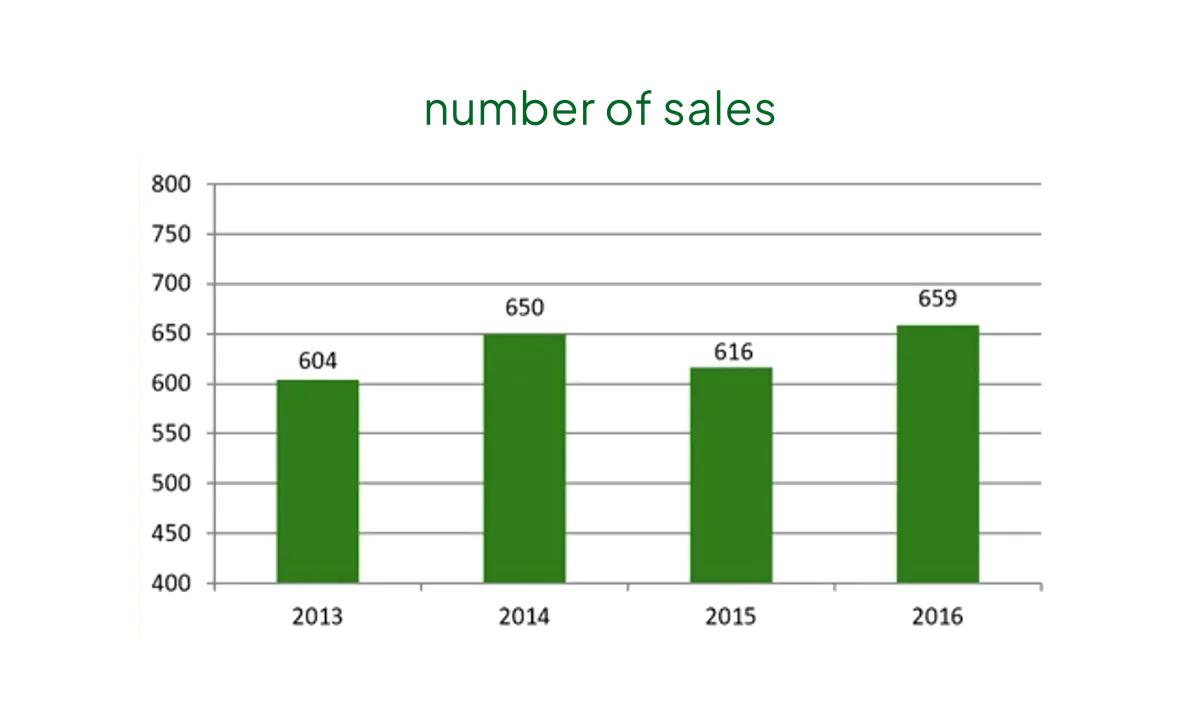
Sales volume increased somewhat from 2015, and in general appears to be slowly increasing.
Average and Median Sales Prices
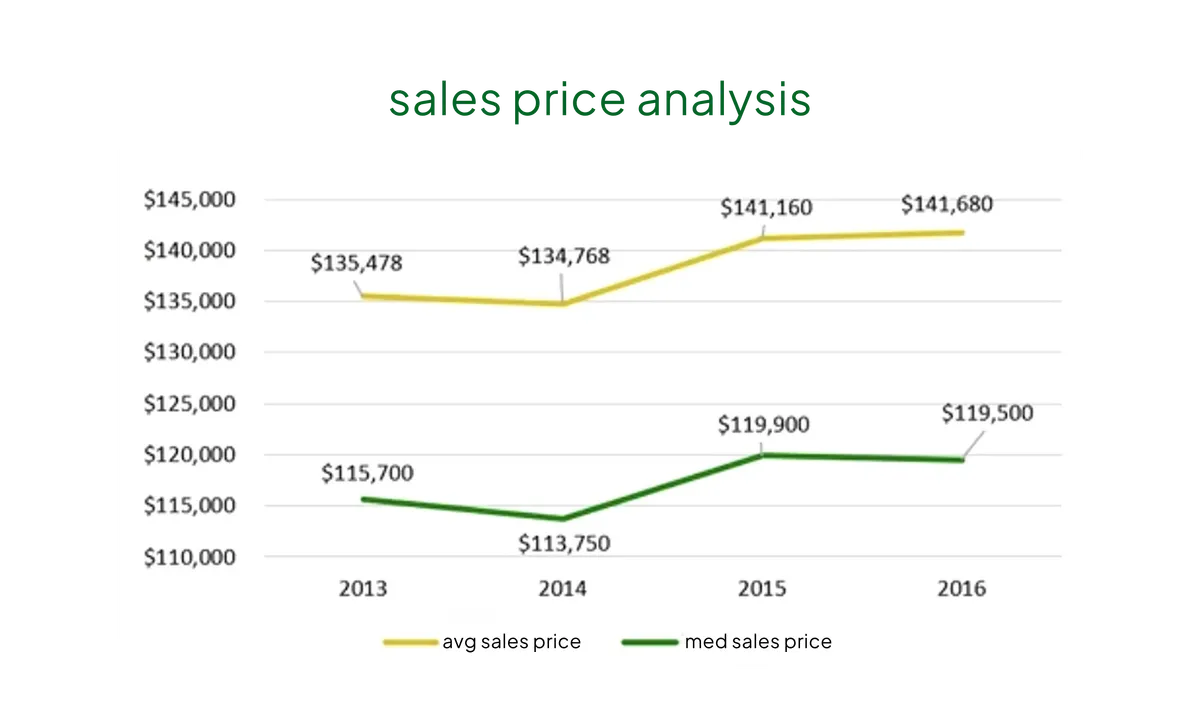
Regarding residential sales price, the market appeared to strengthen significantly in 2015, with the average price increasing substantially when compared to 2013 and 2014. However, during 2016, both average and median sales prices of homes in Quincy leveled off, with the average price increasing slightly, but the median price decreasing somewhat. This is not entirely unexpected, as interest rates increased during 2016, which tends to make homes less affordable. The median sale price tends to be a better measure of central tendency, as it is less prone to fluctuations from sales in extreme high and low price ranges.
Market Measures
Median vs Average
Why the median is a better measure of the typical sale. Illustrative only.
Median
Average
Extreme sales
Lower price
Higher price
Median
Less prone to fluctuations from sales in extreme high and low price ranges.
Average
Can give too much weight to extreme sales, or to homes that sit unsold.
Farm · Commercial · Home appraisals | Missouri · Illinois · Iowa
Days on Market
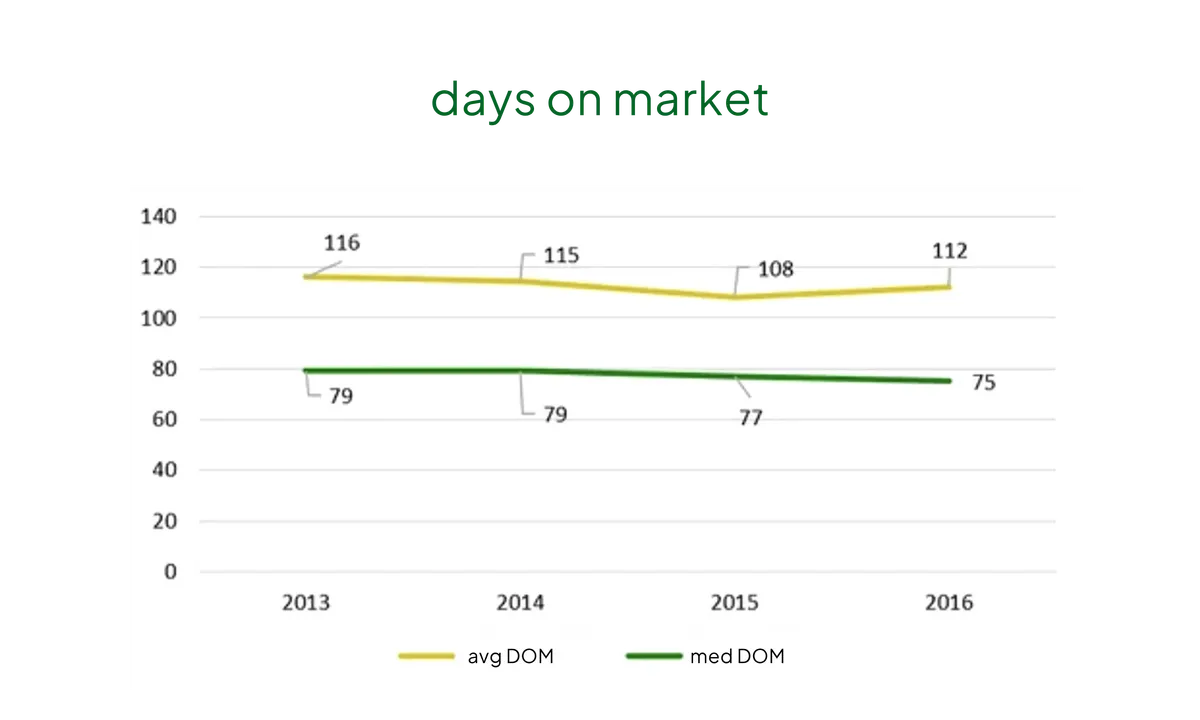
In 2015, the number of days properties sat on the market prior to selling continued to decline. Days on Market can be influenced by several factors, such as unreasonable pricing (both too high and too low), a lack of marketing/advertising by the listing broker, or any number of other reasons. In 2016, median DOM continued to decline, while average DOM inched higher, although it can tend to give too much weight to properties that are improperly marketed and sit on the market.
Outlook for 2017
I anticipate interest rates will continue to creep up during 2017, which may put a damper on any significant price increases, although it is a positive sign that the market does appear to have held steady during the past year, despite the previous rate increases. I view this as a sign that demand in the market is strong enough to sustain prices despite the increased cost of capital.
Market Averages vs. the Value of Your Home
The appraiser cautions the reader not to place too much value on market averages. While they can be useful for determining the strength of the market as a whole, there is no substitute for an experienced and qualified appraiser making a visit to determine the market value of a specific property. Spurgeon Appraisals has the expertise to account for the numerous variables affecting the value of a particular residence, and we bring this knowledge to every appraisal we perform.
Spurgeon Appraisals regularly appraises a variety of property types. We have experience appraising farms, residences, and commercial properties. We pride ourselves on providing excellent customer service and quality appraisals. Contact our team to see how we can meet your appraisal needs and exceed your service expectations.
