
Appraiser Cheat Sheet:
Speed Up Your Appraisal
By Matthew Roberts, Certified General Real Estate Appraiser

A FREE RESOURCE
A Resource for Quicker Turn-Around Time
Download this free cheat sheet and find out how to speed up the appraisal process. This is a resource for you!
If the appraiser is on the way, it’s usually because something important is happening. Whether it’s a purchase, refinance, divorce, or just estate planning, it is always preferred that the process be as professional and fast as possible. Being ready for the appraiser can save time. And time is money, after all.
Transaction Costs: Time Is Money
Every transaction has additional costs beyond the direct cost of the transaction itself. Economists have a term for this: Transaction Costs. Transaction costs are the expenses incurred when conducting the transaction itself. For example: closing costs and time spent negotiating are examples of transaction costs for a sale, over and above the purchase price. In financial terms, transaction costs can be paying agent commissions, legal fees, and payments to other intermediaries. Non-financial costs are most often time spent negotiating, time spent sending and doing paperwork, travel time, time spent researching the subject property and the market, etc.
Time Is Money
Transaction Costs
The costs of conducting a transaction, over and above the price itself.
Financial
- Closing costs
- Agent commissions
- Legal fees
- Payments to other intermediaries
Non-Financial
- Time spent negotiating
- Sending and doing paperwork
- Travel time
- Researching the property and market
Being ready for the appraiser cuts the non-financial costs.
Farm · Commercial · Home appraisals | Missouri · Illinois · Iowa
Be Ready for the Appraiser
One person can’t control every variable in a real estate transaction. But what can be done to save time during the appraisal process is to be ready for the appraiser. The appraiser often asks very similar questions even when appraising different property types, such as: “What type of property is it?”, “Have there been any recent updates?”, and “Are there any immediate repairs necessary?”. Knowing in advance the types of questions the appraiser will be asking, and having the answers ready, will allow for time to be saved when meeting with the appraiser.
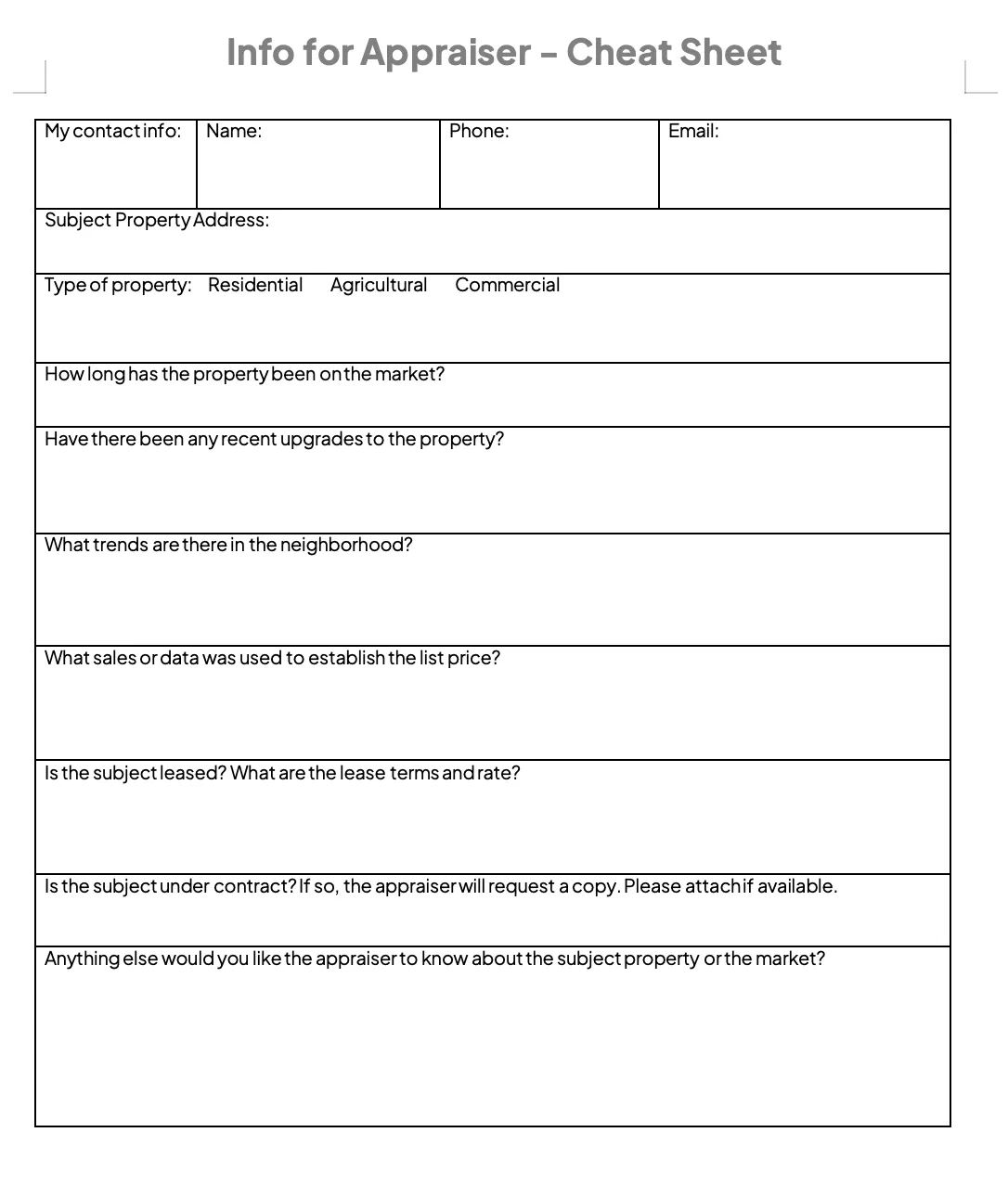
In any transaction, time is of the essence. The appraiser naturally wants to know as much information as possible about the subject property and the market. Use this cheat sheet to get a leg up and save valuable time in the appraisal process.
For Loan Officers and Real Estate Agents
Loan officers and real estate agents: this short list of questions can serve as your “cheat sheet” for communicating with the appraiser. The knowledge and insight you have about the subject property may impact value! You can quickly fill it out and give it to the appraiser in person or via email. If you would like to download a copy as a Word Document that can be edited instead of a PDF, you can find that file on our website by clicking here. Feel free to save a copy to your desktop, and even feel free to send it to other parties to fill out so that you can gain property information from your clients for your own use. Also, you’ll look super professional and save so much time normally spent asking and answering questions via email. Feel free to edit the sheet with additional questions and copy it as much as you like.
This document can be used to address how the market responded to the subject listing, number of offers, etc., and offers the agent an opportunity to provide insight into buyers’ preferences, market trends, or insider knowledge about the subject history or competing properties.
Be Ready
What to Have Answers For
Appraisers ask similar questions, even for different property types.
Questions the appraiser often asks
What type of property is it?
Have there been any recent updates?
Are any immediate repairs necessary?
Insight agents can share
Farm · Commercial · Home appraisals | Missouri · Illinois · Iowa
It’s Okay to Talk to the Appraiser
It is okay to talk to the appraiser. Sharing facts and information about the subject property is A-Okay. But please avoid statements that could be construed as attempts to steer value. Be specific about upgrades. For example, instead of saying “remodeled throughout” or “they spent $30,000 on remodel”, unpack what that means about what type of and when renovations have been done.
Talking to the Appraiser
Share Facts, Don’t Steer
It is okay to talk to the appraiser.
A-Okay
- Sharing facts and information about the property
- Being specific about which upgrades were done, and when
- Insight on offers, buyers and market trends
Avoid
- Statements that could be seen as steering value
- Vague claims like “remodeled throughout”
- Leading with what was spent, instead of what was done
Farm · Commercial · Home appraisals | Missouri · Illinois · Iowa
I hope this is useful to you and your clients. Any questions or ideas? Feel free to contact us. If you are a homeowner, also see our previous newsletter on how to prepare your home for the appraiser’s visit.
